

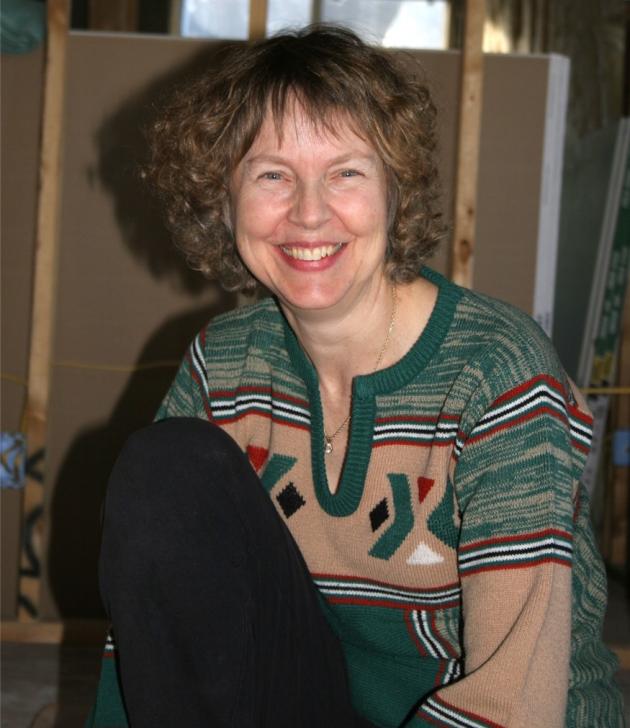
Throughout this interview, the beautiful theme of Nelle Moffett’s life shone through: First asking, “How can I serve?” and then opening up to the world’s response to that question and taking action.
Jocelyn Jacks Kahn: Looking at your resume, Nelle, I'm extremely impressed by the width and the depth of it. The themes that come through are spirituality, education, and making life better for people – so I certainly see the connection with Focusing. But how did you originally come to know about it?
Nelle Moffett: Well, the first thing was my own healing. I was in the process of a divorce at that time, and I was really just trying to figure out what happened and where to go. With the divorce and everything coming up personally for me and trying to find my way through all of that, I would describe myself at the time as feeling like a “wounded child.”
And somehow, I came across Gene Gendlin's book Focusing. I'm a reader, so finding books is what I do! I was really drawn to it. In his book, Gendlin talked about learning how to Focus. So I contacted The International Focusing Institute (TIFI) at that time and asked for an introductory session to Focusing, which I received. Because I was living in California then, the person I worked with referred me to Ann Weiser Cornell. That was probably around 2001. I started taking everything that she offered! Ann encouraged all of her students to become members of TIFI, and so I did in 2003. That's how I found Focusing and TIFI.
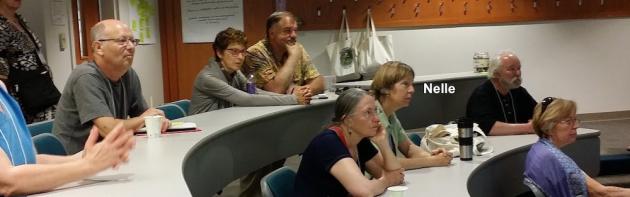
Jocelyn: And from there, how did you come to be on the TIFI Board?
Nelle: It was pretty miraculous, actually! Because I'm kind of an introvert, it was not anything I ever would have expected or planned for myself.
It so happened that I attended the 2015 International Focusing Conference in Seattle. That was a year when Catherine had a consultant who was leading TIFI through a strategic planning process. I had been involved with a number of boards in my professional life, so I was familiar with those kinds of issues.
So of course I had some opinions about how it was being done, and I asked to meet with whoever was in charge. Catherine was there, so I met with her and shared some of my thoughts. We continued having telephone conversations after that for several years, and I offered support in terms of strategic planning and board issues that came up.
That was the beginning of our more personal relationship.
Catherine recommended me to the Nominating Committee, which ended up nominating me to the board. So I joined the board in 2019, and I'm really glad that I did. It has been a wonderful experience, and part of that has been continuing contact with Catherine, who I love. She's a wonderful person and a benefit to the organization.
Jocelyn: I was very interested in seeing on your resume that your college major was philosophy. How did you come to choose that major?
Nelle: Well, I went to Antioch College, which was a unique college at that time (and I guess it still is). It was a wonderful place to go to find yourself. It was very freeing – there was no set curriculum, and you could take whatever you wanted. I just started taking courses that sounded interesting to me.
I didn't know what I "wanted to be when I grew up," you know – I was just kind of lost and trying to find myself. Philosophy seemed a good place to start. I also took some psychology courses, but they weren't going in the direction that I was interested in.
One of the philosophy courses I took was in Eastern mysticism, and it had a huge impact on me. Because you picked your own courses and found your own path, it was not the standard philosophy major you would get in most universities! It was a perfect place for me to build my own curriculum based on my interests. It was also a time of T-groups (also known as encounter groups), which I was involved in. You probably remember those – this very explorative kind of environment.
So for me, that's what philosophy was. I wasn't interested in the standard curriculum in philosophy. I was finding my own interests and path.
And I would say that finding the Focusing book was part of that exploration. It fit into my path of self-discovery and trying to understand the world and what my values were. Another part of my exploration led me to Nonviolent Communication by Marshall Rosenberg. Ann Weiser Cornell pointed me in that direction, which was extremely helpful for me. Feelings and needs – go figure! I’d been brought up in a context of “right and wrong, good and bad.”
Jocelyn: In my own case, I often feel that there's a sense of some sort of internal thread that I’m following. And I’m not consciously aware of it – but suddenly something comes along that lights it up and makes itself known as something significant to my path, even though I might not be able to clearly articulate why at the time. It sounds like that might be how it is for you, and that you have been following that internal thread throughout your life.
Nelle: I like the words you give to that – that really says it for me, that “lighting up.” There is something that lights up in a path, and I follow it; and there are other things that just don't resonate, and so I don't follow them.
There was always the question, “What do you do with a degree in philosophy?” At that time, one of the typical paths for philosophy majors would be law. That was certainly not my path!
Self-discovery and Focusing just fit right into my interests. And I enjoyed the philosophical foundations in it. Gene was a philosopher, and Carl Rogers was a name I was familiar with at that time. So Gendlin's book lit up for me.
Jocelyn: Looking again at your resume, at all these threads of spirituality and education, and of making life better for people, I'm interested to know if anything further comes to mind as far as other points like that, that just lit up for you, that deeply resonated with you.
Nelle: Of course, that class that I took at Antioch in Eastern mysticism was one of those points.
I grew up in a Presbyterian home. My father was a minister. His ancestors were missionaries, and – I can't say spiritual – but connected with the church. And when I went to Antioch and I took the course in Eastern mysticism, there was a book we read that had a quote in it from the Buddha or a similar figure. I can't remember the quote now, but what I do remember is that it was exactly the same as a quote we have that Jesus is supposed to have said. So it was like: Ah! That Christian bubble is not exclusive – that path is not the only one.
That really opened up my world.
So I followed Eastern mysticism, but also other things that were around at that time – for example, the Carlos Casteneda books about a Yaqui shaman, Don Juan Matus, and literature on the wounded child. So I was spreading myself out and looking for things that were inspiring or healing for me at the time.
And of course there were the T-groups, as I said, where we would get together and share things, and just all of the vibe in that era of the late 60s and early 70s.
There was a lot going on in psychology as well as spirituality, so that kind of blended the two for me. And again, I was really looking for myself and my own path. That was the guiding light, rather than the intellectual career thing. I hadn't a clue what I was going to do "when I grew up" – finding myself is what it was all about for me.
So Gendlin's book fit in just beautifully. And when I found that there was a teacher close by – Ann Weiser Cornell – I wanted more!
Jocelyn: So getting back to your point about the phrase that was the same in the teachings of Christianity as in Eastern mysticism – it certainly makes sense because all the great mystical teachers seem to have common themes.
Nelle: Yes. I believe they're drawing from the same source, even though they name it differently. I don't think there are multiple sources of truth out there. There's truth and there are different names that it comes by. So it took the exclusivity off it for me.
Jocelyn: Looking at your post-retirement experience, it looks like you've been very involved in that theme of making life better for people. You were involved in a Helping Hands Re-entry Program, in a Coalition for the Homeless program, in diversity work – I guess this involvement was just sort of a natural flow from the work you've been doing throughout your career.
Nelle: Well, in hindsight, it may look like a natural flow! In the actual process, it was just a matter of trying to find myself, and what's next, and what's calling to me.
Retirement is both an opportunity and a scary thing – if my job is no longer defining me and giving me something to do, now what? And so of course, I went to the books.
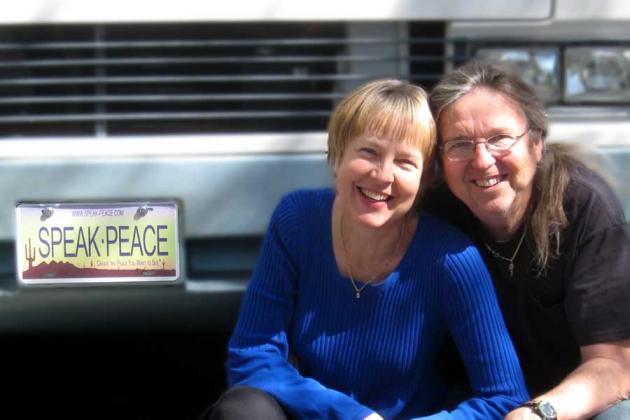
But also, my current husband and I went on an RV adventure in 2013. We were looking for where we could serve. So I made a list of people who are in this West Coast area who I knew were doing things I was interested in. I wrote down their addresses, and we took off with the RV to visit them and see: Can we help you somehow? Nobody took us up on it. It was kind of strange!
But we got to Astoria, Oregon, and we liked that area. There is a large network of RV parks. When you’re traveling in an RV, you've got to line up where you'll spend the night ahead of time when you're traveling. One of the things that was unique about the Astoria area is that there were two RV parks within 15 miles of Astoria in our network. They're usually much more spread out. But it gave us the opportunity to bounce between them and stay connected with Astoria for a long time.
Since we liked the town, we started teaching Nonviolent Communication as a way of experimenting and finding out what people were interested in. That was how we got involved with the people that were homeless there.
When we first moved there, I couldn't tell a homeless person from somebody who wasn't. But gradually, as we were walking downtown, we got to see people regularly and got to know some names. So we offered to teach Nonviolent Communication to an organization, Helping Hands, that had a residential facility for people coming off the street out of addictions to get stable for a year or two and then to move on. We ended up doing that for several years with different groups as they went through the program.
An interesting story: One of the things that we would ask is, “Where do you see power-over in our world?” Nonviolent Communication is the opposite of power-over, but it identifies those situations. The homeless people in the program named them right and left, all the places where there's power-over. We also taught Nonviolent Communication to the faculty of the local community college. When we asked them that question, they could hardly come up with any examples! And they didn't come up with education as an example of a place where there's power-over. And yet – grades! It's pretty obvious that it’s the teacher who has the right answer, and so you give the right answer and you get the good grade. That's a power-over system. And the teachers couldn't see it. It was very interesting.
In the meantime, we were still going back to Arizona, which was our home base at that time, and bouncing between there and Astoria before we really grounded ourselves in Astoria. And I had a friend in Arizona – we were Focusing partners – who I was talking to one time, and she was saying what she longed for. She was pouring her heart out. She longed to be able to discuss and share spirituality in a safe environment. So my husband and I developed the concept of Authentic Spiritual Conversations.
We put an ad in the paper and just started offering it, and people would show up at the library, and we'd have these conversations. We then developed a value statement based on: What are the guidelines for a conversation? Because people, I think, are seldom trained in how to have a safe conversation – so they get opinionated and they start preaching, or they do these other things that do not feel safe for people who are exploring.
So we developed this value statement that consists of guidelines for the conversation to have an authentic basis, which means risking being open – spiritual conversation in a safe environment. We began it there in Arizona. And when we went back to Astoria, we started a group there to see if that would be interesting for anybody in the area, and we got a small following.
Then we stopped bouncing between the two places and moved to Astoria. We actually bought a house there. At this point, we wanted more than just a place for our Tuesday night Authentic Spiritual Conversations. We wanted to have a church environment that was a safe environment for anybody, for all of the spiritually-oriented "none-of-the-aboves," basically. The population in the Astoria area had a high population of none-of-the-aboves at that point.
The reason we were thinking of churches was that my husband had discovered an interfaith seminary. Before that, we didn't know that there was such a thing. But he said he was going to enroll. And I said, "Me too!" So we did that together.
But the joke is that after you get ordained in a non-denominational interfaith spiritual path, then what do you do? Because there are no denominational churches looking for an interfaith minister! So we said, “Well, we'll have to start our own.” And we started a non-denominational interfaith church called Common Ground Interspiritual Fellowship.
Then one of our people said, "Why do you call this a church?" So we started calling it an Unchurch!
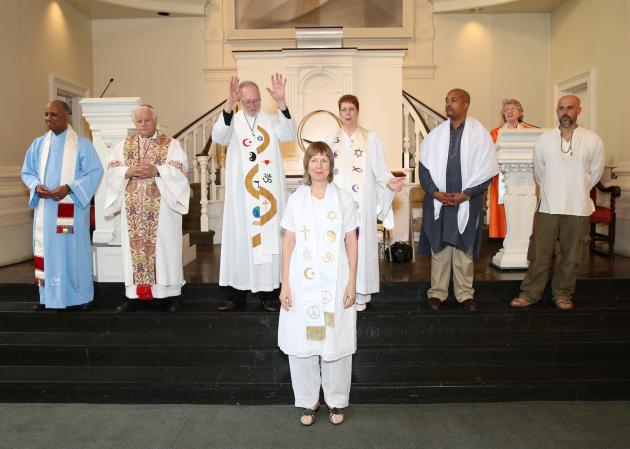
One thing that we had heard from some of our conversations is that people like the ritual of their background – primarily Christian churches – but they don't like the belief system. They can no longer buy into that. So we said, “Okay, so how do we develop something that has ritual but is also completely open, so people can draw on their own language, their own sources?” That was really fun to do.
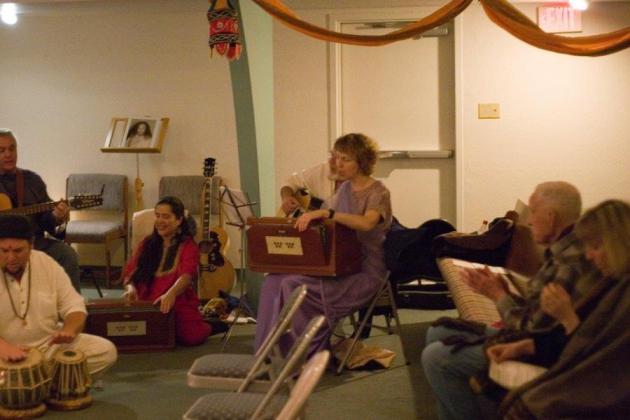
So we created a place where they could feel safe. Instead of a sermon, we had a conversation –we used our Authentic Spiritual Conversation process. We'd have a reading we selected from a number of different sources rather than any one spiritual path. And they could like it or they could hate it. There was no expectation in that way.
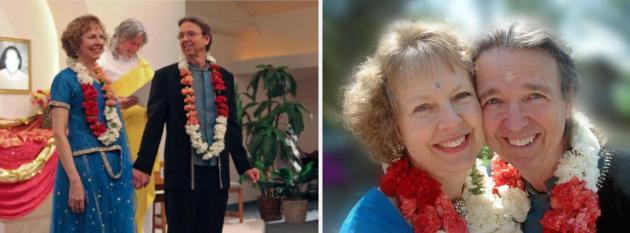
I should mention that my husband and I originally met at an ashram based on Indian guru Paramahansa Yogananda’s teachings. So we were both most recently in that spiritual tradition before attending the interfaith seminary. And we brought one of the rituals from our ashram experience into the Unchurch ritual. We would have people write on a small piece of paper something that they wanted to release and then burn it in a candle with the intention of releasing it. People really liked that. Again, they could apply their own language, their own belief systems, to what they were doing. It was very open that way. We did that for many years, until we left Astoria.
Jocelyn: I'm seeing this beautiful theme of your life – this question of, “How Can I serve?” – and then opening up to what comes in response to that. And I imagine that this theme must have come into play in terms of becoming a TIFI Board member as well. I'm very interested to hear about that.
Nelle: So as I mentioned earlier, it all developed through meeting Catherine at the International Focusing Conference in Seattle. Because of my background in strategic planning and other types of board issues, I ended up acting as both a support and as something of an organizational coach through our continued conversations.
My background is in higher education. In most of the jobs I had, I was reporting to the president of the organization, so I was very much involved in the administration. Of course, strategic planning is a high-level operation for an organization, so I wasn't buried in the depths of the details of actually running the organization. Rather, through my history, I had a lot of overview and insight into what made an organization functional or dysfunctional.
So Catherine started talking to me about some issues. And then at one point, she said that she had suggested me to the Nominating Committee, and that the board had approved my nomination. It was a total shock to me, and I can't tell you how meaningful it was to me to be invited to serve on the board.
It wasn't just the process of being on the board. It was that I saw myself as invisible, basically, except where my husband and I created some very small organizations. And here I was being asked to serve on the board of an international organization! How did that ever happen to me? You know, it just didn't fit my expectations of myself.
So it happened simply because I went to that conference, and they were doing strategic planning, and I had something to say about it. That was the entree.
Then it expanded into this thing that I still can't fathom, and it still brings me to tears because – particularly at this time in our world – to be a part of The International Focusing Institute that has people teaching Focusing in just about every country in the world – it deeply touches my heart. The fact that I'm involved at that level – I mean, if I were teaching Focusing or had some Focusing people that I was supporting, that's a level that I would understand from my history. But being on the TIFI Board – being president of the board of an international organization – just blows my mind.
Jocelyn: I hear the emotion in your voice – the depth of feeling that comes from having simply asked, “How can I serve?” and then being invited to serve at such a high level within this institution that you love. And yet, even if the other institutions you've served are smaller, you do have a depth of background to offer in this role.
Nelle: For me, the TIFI Board is six people. As an introvert, I don't find that overwhelming. And of course it's not the board that runs the organization. And I have that clarity from my background – we hire somebody to run the organization. So being president of the board is not a huge load. The executive director bears the load. The board carries the legality and integrity of the organization.
When I came on the board, just as a regular member, I saw immediately how it could be better organized. There was, to my eyes, a lack of clarity on what a board’s role is, and some internal tension that was probably a result of that lack of clarity. The record keeping needed improvement, as well as knowledge about what is essential board work.
When the opportunity arose, I offered to become board president. I had already been on the board long enough to see that I had something to offer as far as clarity and organizational skills. At that point, it was easy.
I also had a relationship with Catherine, and I trusted her. I felt that the lack of understanding of the role of the board in relationship to the role of the executive director resulted in the board occasionally not placing enough trust in her.
The executive director is the employee of the board. When a board is adversarial to its own employee, its own staff member, that's like shooting itself in the foot. It’s so important for the board to work alongside the executive director. It's a partnership. Of course, if the administrative people are not doing their jobs, then you fire them and get somebody who will.
I also make it clear that no one board member has the power, not even the board president – it's the board as a whole that has the power. As a board president, I don't have any power outside of the board, and the board only has power when we vote on something and agree on something.
I think that this clarity and the professionalism that I've developed in my career is what the board needed at this moment in time. Looking ahead, knowing that this was going to be my last year, I asked myself: How can I set the board up so that it can continue in a positive way?
I looked at each of the members and got a sense of who would be a likely candidate for board president. And there were only two people who were not otherwise committed, and only one of them showed an interest in being president. I started training him right from the beginning of his term on the board, including him in things that I was doing, and explaining why I was doing what I was doing, giving him exposure to various situations so that TIFI wouldn’t have somebody who was both new to the organization and unfamiliar with organizational politics and parameters.
I'm really happy I had the opportunity to do that. The board still has to vote on the president elect, and we've shared with the board that the person who is willing to take it on has had training.
Jocelyn: As an aside, I'll mention that I happened to work for a nonprofit as the assistant to a string of four different executive directors during the 15 years I was there; their board was extremely adversarial, and it was very difficult and painful for the whole organization. So I think TIFI has been very fortunate that you have been able to bring in the experience and clarity you have about the role of the board as partner to the executive director.
Nelle: The correct relationship between the board and the executive director is of critical importance. An institution can be torn apart by all the factions. At a college, as an example from my background, you've got the faculty faction, you've got the community faction, you've got the classified staff faction, and you’ve got a board faction as well. You've got all of these factions. And the politics could get very messy. So when you get somebody crossing boundaries, crossing lines, it's not good. Each faction is looking for a champion. So if they could find an individual on the board who was willing to be their champion to take down the executive director, they would try and do it. That's the potential seriousness of it.
Jocelyn: It sounds like it's basically been a matter of educating the new and remaining board members and providing them with this clarity about their proper role – especially that whole orientation that they are here to support the executive director, not to take on an adversarial role.
Nelle: Yes. And one of the things that I have said recently is that no board member, including the president, is the boss of the executive director. The board as a whole is the boss of the executive director. They work together, they listen. They may bring issues to the board, for the whole board to discuss and perhaps vote on. But they don't tell the executive director how to do their job.
We had something come up just recently. It was really good that it happened at this time because it gave me the opportunity to add processing that issue to the training of the incoming president. It provided an example of not taking sides with someone in the organization against the executive director. If there's an issue, bring it to the board. The entire board discusses it.
All organizations are full of criticisms that recognize just one little piece of the picture or maybe one thing that someone happens to be particularly sensitive to. And if they can get an individual ear to take their side, it can generate chaos.
So that's what a healthy organization looks like: the board serves as a partner to the executive director, and decisions are made by the board as a whole.
Jocelyn: Talking to you, I get a real sense of the strength and clarity that you derive from your depth of experience working with boards, and the ability to work with the strong personalities that any organization has.
Nelle: At one point, Catherine brought an issue to the board. The word “Focusing” was faring poorly in search engines and automated translation software. Search engines and automated translations were overwhelmingly assuming the general meaning of “focusing” and thinking it meant anything from photography to ADHD. Catherine could have made an executive decision about how we write about Focusing on the website to try to address the issue but, understanding the sensitivity involved, she asked the board to consult with her on it. We had a number of conversations expressing our concern that the right people might not find TIFI’s website through the search engine. We brought in a long-time Focusing Coordinator who had worked closely with Gendlin because we all wanted to be sensitive to all of the issues involved.
But when we let the Coordinators know about our decision and requested their feedback, the reaction was not what we’d hoped. We felt that much of our intention was somehow lost. There was an outcry that we wanted to “change the name” of Focusing and many expressed it as a betrayal of Gendlin’s legacy and an overstepping of our authority.
We got through it in a Focusing way, with a lot of listening, reflecting, and communicating, and I am proud of the board and the Coordinators for this. But that's the kind of thing that you don't want a board member to jump into without being prepared.
Jocelyn: What you brought to the board during your tenure there is evident.
Nelle: Thank you for the opportunity to have this conversation.
Jocelyn: Is there anything I didn't ask that you would like to speak about?
Nelle: Yes. I did want to say that it's with sadness in my heart that I complete this term – I have so enjoyed it. It's been deeply fulfilling to me and meaningful to me. I do understand the wisdom of term limits, and I have some mourning about it as well. And so I'm looking at other committees that perhaps I could serve on so I can continue staying connected with TIFI in an official way.
Jocelyn: I'm very glad to hear that.
Nelle: I can't say enough about TIFI to people who are looking for something to get involved with, to invest in, that's meaningful and making a positive contribution. I can't think of anything more important than TIFI, especially at this time.
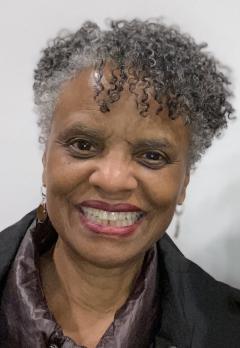
Jocelyn Jacks Kahn is a certified Focusing Trainer in the traditions of Inner Relationship Focusing and Relational Wholebody Focusing. She is also certified as a meditation teacher in Judith Blackstone’s Realization Process, a spiritual practice of embodied nonduality.