
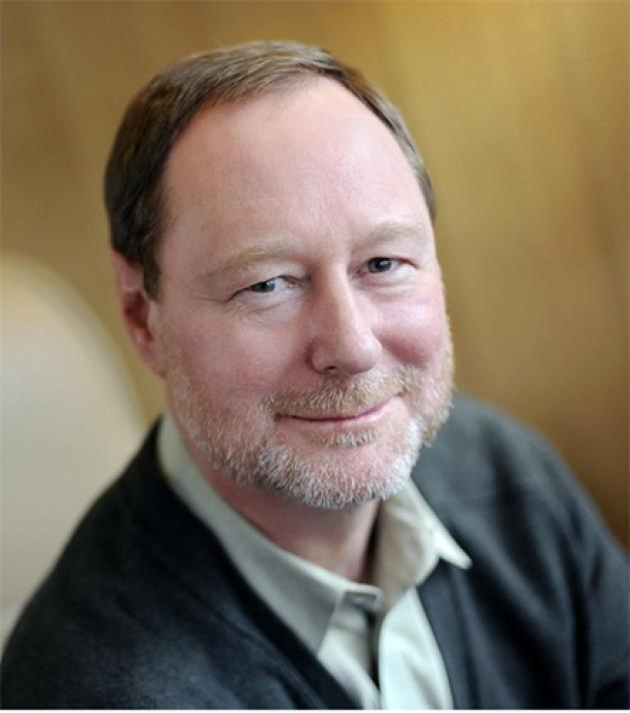
Dawn Flynn: Hi Jeffrey, it’s so good to be here with you. Why don’t we begin with how you first came to Focusing?
Jeffrey Morrison: I was living at home in Pittsburgh, Pennsylvania, shortly after graduating from college, when I received a newsletter mentioning an upcoming Focusing class, which didn't mean anything to me at the time. However, the description of the class included an explanation that the practice had philosophical underpinnings. Being a philosophy and religion major, I was familiar with existentialism and phenomenology, and the class sounded interesting. So, I took the class taught by Les Brunswick, a graduate student at Duquesne University who was working on his dissertation and had worked with Gendlin in Chicago. After taking the class, he let me know about a new psychology program at Seattle University in Existential Phenomenological Therapeutic Psychology, which I applied to, and I began in 1984.
Dawn: As a student of philosophy and psychology, how was it for you to get to know Gendlin’s A Process Model and Experiencing and the Creation of Meaning?
Jeffrey: That's an interesting question because at first, I would say I didn't do much reading of his philosophical works. I learned Focusing which, as you know, is an experiential process.
Most of the teaching I experienced back then was not very developed, and people were primarily teaching the 6-step process of Focusing. I would obtain manuals on what to do when the process didn't work, and those manuals kept getting bigger and bigger, so it was a little nebulous in some ways.
My first exposure to his psychology and philosophy came at the end of the Seattle University program when I wrote what my graduate program called an integration paper. I integrated my client work in my practicum with Gendlin’s articles, "A Theory of Personality Change" and "Befindlichkeit." I was over my head with the theory, but I managed to put something together.
After graduation, I worked in public education for 15 years as an outside counselor in middle schools for troubled youth. I was aware of Focusing and I am sure it had its influence.
But it wasn’t until I started private practice in 2000 that I decided to study Focusing more in depth with Ann Weiser Cornell and started reading Ann’s work and Gendlin’s articles.
Sometime after I was certified in 2006, I began meeting with Rob Parker and studying A Process Model, as well as delving deeper into philosophy. I began developing a training program, reading a lot of Gendlin’s articles, and, of course with Gendlin, it's not just reading them, it's reading them and rereading them and rereading them and rereading them so that you really grasp them, and especially as a teacher, to grasp them well enough to discuss them and answer questions.
"... when I am most in touch with myself, I feel most in touch with everything. And those two kinds of simultaneous experiences are at the core of Focusing."
Dawn: How has Focusing helped you?
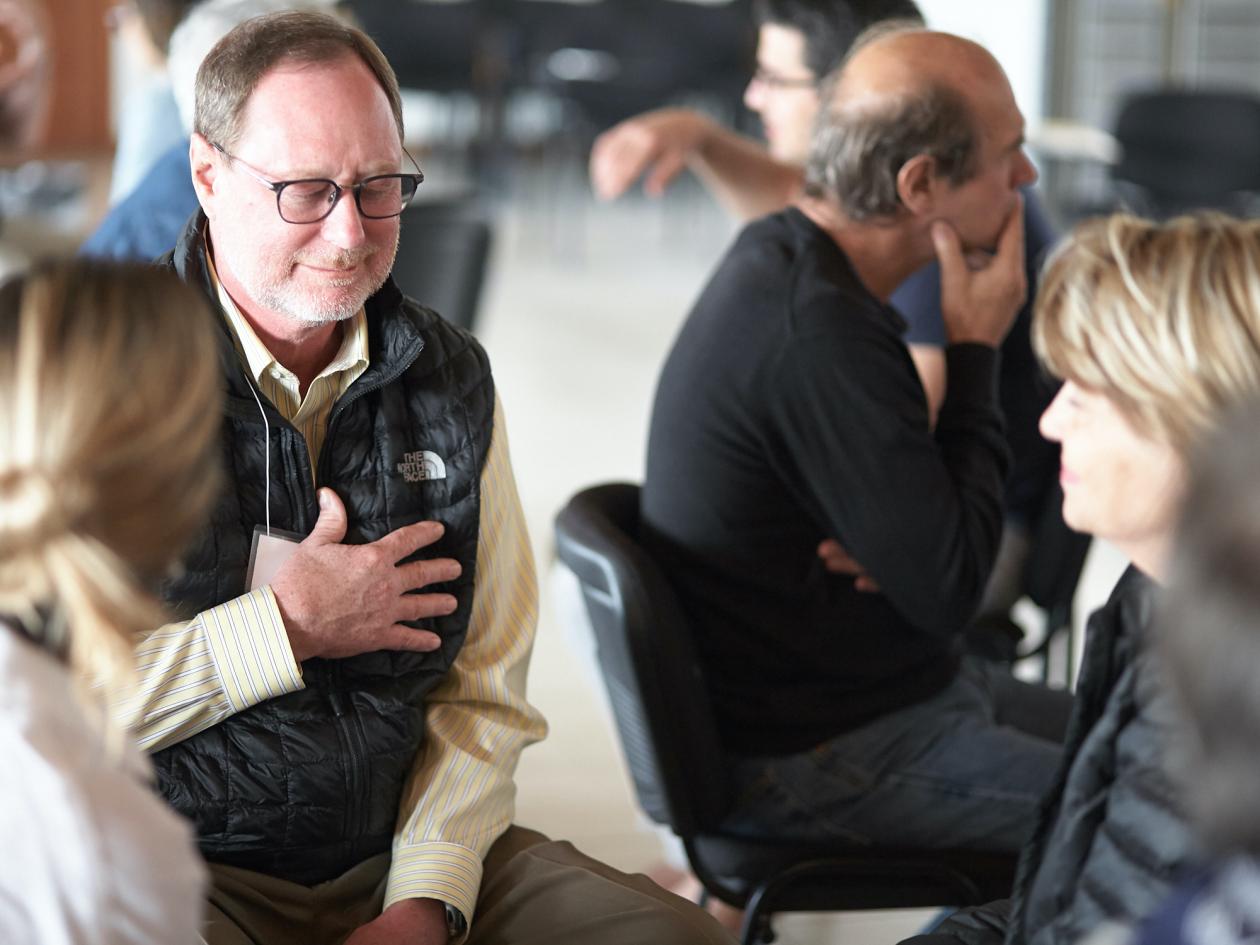
Jeffrey: Like other Focusers, the experiential process really helped me to be in touch with myself, and when I am most in touch with myself, I feel most in touch with everything. And those two kinds of simultaneous experiences are at the core of Focusing, as it truly addresses the essence of feeling whole, being oneself, and being connected to the world. And I think there are spiritual elements that I didn't perhaps know how to develop when I first started Focusing, but am now increasingly interested in how to develop that in one's own Focusing, as well as teaching that to my students.
Dawn: How fitting that you had the direct experience of Focusing and its benefits for many years before seeking to understand the concepts and the theory that underlie the practice.
What did you learn from Eugene Gendlin?
Jeffrey: In 1991, Gendlin came to Seattle University to conduct a workshop and I had the opportunity to meet him, have lunch with him, sit across from him, and look into those pale blue eyes that were so very present. I was a little shy to even look, and then I would look. I don’t remember a single thing that was said as we ate our burritos, but I was affected by his presence.
Later, when I saw and heard him with Rob Parker and Ann Weiser Cornell (on conference call workshops) sharing his ideas, I really had the feeling of someone who is very present, very authentic, self-deprecating in a particular kind of way. As Joan Klagsbrun would say, he was “the unguru guru.” He was very much just himself. And that’s such an appealing quality, at least for me, when someone is not trying to be something, not trying to sell something, not trying to just promote a theory.
The more one Focuses, the more one can sense into the theory and the philosophy and what Gendlin is pointing to, and it just keeps getting deeper and deeper. It's really a different way of knowing, and that is just what drew me in quite naturally and is very much an ongoing process for me and always will be.
Dawn: I feel that what you are describing is humility, and it really stands out when it is present in a teacher or someone with authority. I am drawn to that quality very much as well. Actually, I sensed that in you from the moment I met you.
Jeffrey: Thank you. Gendlin discusses the therapist's attitudes and ways of being with the client in his Focusing-Oriented Therapy book. At the end of the book, he explains that the therapist-client relationship involves two distinct roles, but the relating is equal. And relating whether you're the teacher, the mentor, or the therapist, the relating is completely equal. I'm a human being; you’re a human being. Yes, if I'm the therapist, I have a different role, but I am no more or no less than you. And to keep that in mind, whether I'm teaching, being a therapist, a partner, a parent, a friend, or having someone work at my house. We are all human beings.
Dawn: You mentioned Ann Weiser Cornell and Joan Klagsbrun. Are there other folks in your life who have led you to be who you are today?
Jeffrey: My first mentor, Howard Johnson, a professor at Elmira College, had a big influence on me. He discussed the importance of direct experience. He was a scholar of Kierkegaard and Heidegger. I recall reading Being in Time in a small group setting in his office. He taught me basic principles, such as the fact that life isn't a thing, but rather a process; that life is “ising along” as he would say. Having developed that sort of framework as a 20-year-old, it set me up nicely for the kind of philosophy that interests me, as well as Focusing, which posits that human beings are process. And so, when I came across that notion laid out more specifically in Gendlin's philosophy, it made perfect sense to me. It wasn't something that required me to alter my thinking significantly. Howard saw me, supported me, and encouraged me, and that's what a good mentor does.
Joan Klagsbrun has been another mentor with whom I’ve attended workshops, and more importantly, over the last 13 years, she has been a mentor who has helped me be more involved with the Focusing community.
Studying with Ann Weiser Cornell came at a good time; Ann was able to articulate in a developmental way how to relate to experience. Her use of language has been very helpful.
Shirley Turcotte is a huge influence. I believe our teachers, whether we're still learning from them directly in person or not, have an ongoing impact on us. And she really helped me understand trauma and how to look at trauma and how to work with it, and how to really be directive in the process of working with trauma.
I think many Focusers struggle with being directive because the Focusing process itself is not directive. It's more reflective listening. When working with trauma, the therapist needs to keep the client safe, navigate speechlessness, and help separate the client from their trauma.
I'll tell clients, I understand the territory, but I don't know where you need to go and what you need to experience. So, I'm following the client, but I understand the territory, and I can offer some insights about that, as well as provide direction, which I think saves a lot of wasted time in therapy. I also know when to step back and be very experiential, practicing good reflective listening, Focusing, and guiding skills.
Russell Delman has been instrumental in many ways, as he encapsulates how to be with one's experience, particularly emphasizing embodiment in meditation and Focusing. He had a long friendship with Gendlin. They were Focusing partners for some 10 years or so, and Gendlin, in addition to Moshe Feldenkrais, had a profound influence on him, which he shares with knowledge, awareness, and a wonderful sense of humor.
I think a sense of humor is a challenging thing to teach, but it is an essential quality for effective trauma work in being a therapist.
Dawn: Will you say more about that?
"In the midst of what feels dark and heavy and yucky, we can also turn the light around a little bit and see that there's irony and there's some humor ... "
Jeffrey: We all suffer, and trauma work is working with human suffering. In the midst of what feels dark and heavy and yucky, we can also turn the light around a little bit and see that there's irony and there's some humor, or we can take a deep breath and laugh a little bit, and that can be so relaxing in the moment and so healing beyond that. I think humor takes the relationship to a deeper level because it becomes playful. It becomes a little unexpected. It just gives us a sense that, oh, we're both real people here, sitting in a situation that, in some ways, may be hard to make sense of at the time.
Dawn: Yes, I have a very clear memory of being in your office, sitting across from you, in tears after sharing something painful. You smiled as you rubbed your hands together. "Oh, more grist for the mill,” you said with what appeared to be pleasure!
Your reaction, with a humorous tone, shook me. Your humor gave me a different perspective. Suddenly, I didn’t feel like I was dealing with the heaviest thing in the world, like I wasn’t going to die from it, you know? It didn’t take away the depth, the pain, or the suffering, but it made it easier to contain all of that. So, I definitely feel that from you, and I can feel how what you say about humor is true.
Would you like to share the work you have done with TIFI?
Jeffrey: The first volunteer job I had was at the 2014 FOT conference and I was the only guy with about 10 high-powered women, and I really got to see how highly functional people can pull off a great event. I got to know the people involved, connect with them, and to appreciate their wisdom and hard work. At almost the same time, I began planning the 2015 International Focusing Conference here in Seattle, and thank God, I had you to work with on that! We went through a lot together doing that.
And then, right when I thought I was going to collapse, I was offered the opportunity to be one of the team members on the Weeklong teacher group. And I couldn't say no to that, because I had had such a great experience attending the Weeklong in 2006 when I first became certified. That just helped encourage my teaching, my sense of the international community, and helped support lifelong relationships, just wonderful experiences. Most recently, I co-chaired the planning committee for the 2023 FOT conference.
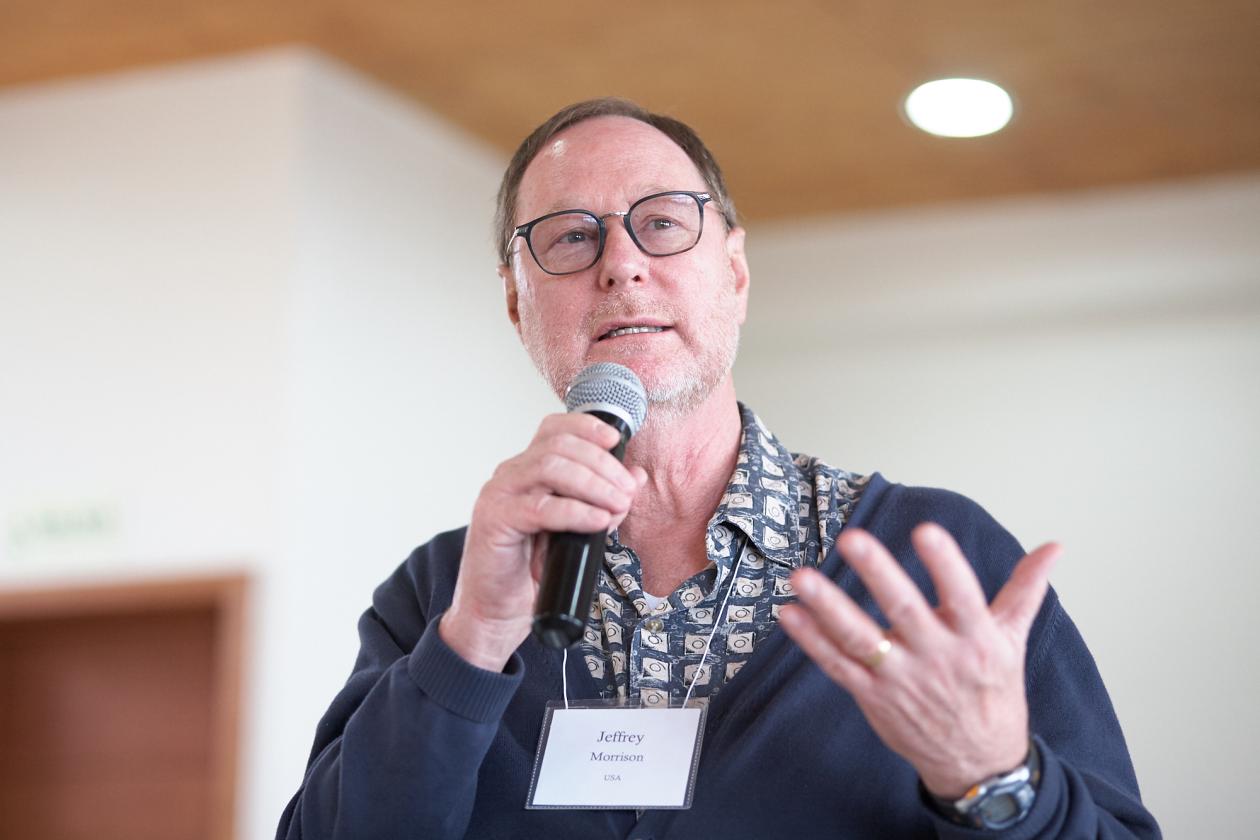
Dawn: You’ve been busy. The Seattle Focusing Institute is a significant achievement. How did you decide to take that on and create it?
Jeffrey: Well, I think, as with most FOT’s, you're a therapist, then you start teaching, and then maybe teaching really becomes primary, which is what's happened for me over the years. I'm more interested in teaching at this point than in direct client work. I do both. But I wanted to create a website for teaching and to build community. And at that point, when I first started thinking about creating this, classes were in-person, and it was more local in terms of community. And right when I started launching The Seattle Focusing Institute, COVID occurred and all of a sudden everything shut down. I had to take a program that was originally all in-person and reformat it for online delivery, which I did. That took us some time, and then I discovered, "Wow, it's not so hard to teach a class on Zoom and have people from Malaysia, Vietnam, Europe, and all over North America attend." It’s quite a different kind of community. However, I have historically enjoyed bringing people together.
Dawn: Is there anything that you feel hopeful about in the future, or perhaps something that discourages you?
Jeffrey: Yes, don't be fooled by AI. It's going to begin to take over the world of therapy. It has already started to. It is a machine learning program developed by humans. It is not a living process. It can take information and rearrange it. It does not create something fundamentally new. It's not a living process, yet it's going to be very cost-effective and will displace a lot of people.
"It’s really my job as a therapist to be the kind of interaction that helps someone change, and if I'm doing it well, I can allow myself to be changed in the process."
The other piece of advice I have is don't be fooled by protocols and answers. People make therapy into a sort of technology, a protocol-oriented way of being with others. And it's not a healthy way of being with others. We are losing the fundamental sense of what a relationship is. I want to give a shoutout to Lynn Preston and her work, particularly her relational approach which embodies the masterful therapy that creates a new "us," that therapist and client can change together. It’s really my job as a therapist to be the kind of interaction that helps someone change, and if I'm doing it well, I can allow myself to be changed in the process.
You were one of the first people who taught me that. You changed me. You are one of the people who taught me the most about working with trauma.
And thirdly, the emphasis of being present with another human being is enough, and when I'm present, I can be present to what I'm sensing. I can be present to what the other is sensing, and I can be present to the interaction that we have together. And being able to work with all three of those gives me a wealth of information to work with, which enables me to become a much more masterful and helpful therapist.
Dawn: I see you doing that so well, the not doing. You are simply attending to the space between the therapist and the client and being present within that space. And it feels like there's so little that you need to be, so little strategy needed, less dependency on the theories and the trainings. I sense in you all that is there, but really, what I feel you're doing is just being a person with another person.
Jeffrey: I have an idea for a workshop. It would be, What is a human being? That would be the starting question. And what is trauma, and how do people heal? Human beings are process, and what does process need to change? It requires an unencumbered presence. It needs us to simply be a witness to the experience, so that the process itself can unfold, evolve, and continue to change. And there are some things to do along with that, but if you start from a place of wanting to change or fix or make better, you’re likely to make things worse in most cases. I want to help people understand the importance of allowing someone else - the client - to have their own experience deeply. When they're safe, they can be present, and when they're present, they can have awareness of what's happening in their life. That awareness gives them the freedom to make non-habitual choices. We can see what's happening. We can see what we habitually do, but we really need the freedom to make non-habitual choices, and that comes from creating a safe relationship in which someone can really feel present and can be with their embodied experience.
Dawn: I feel a warm love in my heart when I hear you say that, because the first time I shared my own deep experience with another person, and without the other person trying to fix it, was with you. That moment remains here within me still.
For these parts of us that are tender and have been so hurt and are regularly getting messages from the outside that we need to be better, that we need to change, that we need to be active in our personal growth, and we need to overcome, it just feels so relaxing and calming to hear you describe your understanding of how healing occurs.
When we first met, your presence had a significant impact on me. You were so carefree and lighthearted, yet also comfortable in accompanying me into those darker places I was afraid to go.
Jeffrey: And that’s the journey, the descent into the darkness that requires trusting the other, following the other, and learning from each other. A Focusing orientation in therapy allows the client’s process to inform the therapy and the development of the relationship, and from that we have developed a lasting friendship.
Dawn: It is wonderful to come full circle. I have a deep gratitude for the healing journey, your mentoring, and friendship.
Jeffrey: A big yes to all of that!
Dawn: Is there anything else we didn't cover, or any final words you'd like to share?
Jeffrey: I have been fortunate to have great clients, but I've also been fortunate to have a great wife who has supported me in all my learning, retreats, travels, and Focusing work. I want to thank Esther for supporting me on my journey.
Dawn: Thanks for mentioning her and the others who have been a part of your life. I'm glad I’ve had the opportunity to be a part of your life too.
Jeffrey: As Robin Wall Kimmerer says, “All flourishing is mutual.”
Naturopathic Doctor, Acupuncturist, and Focusing Coordinator, Dawn Flynn, practices in the Skagit Valley of Washington. Her main orientation is helping people with chronic trauma-related health issues, such as pain, depression, anxiety, ADHD, and addictions, experience long-lasting health and transformation mentally, physically, and emotionally and spiritually. She also enjoys teaching Relational WholeBody Focusing to healthcare practitioners and others. Visit www.wholebody-holistic.com for more information.