

Focusing in Hungary: Personal Paths, a Professional Community, and the Process of Institutionalization
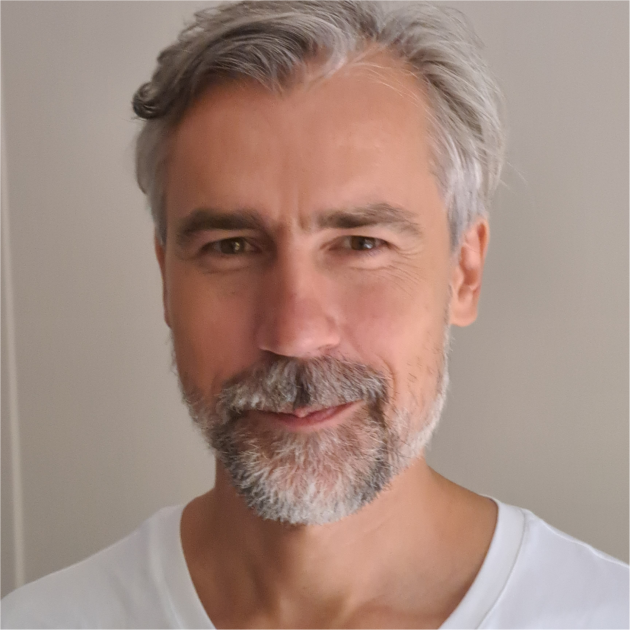
Árpád Kántor is a clinical psychologist, Focusing-Oriented therapist and trainer, TIFI Coordinator, and the professional founder and leader of Focusing-Oriented trainings in Hungary.
This conversation follows how Focusing found its place in Hungary and gradually became a recognized and living professional practice. Árpád Kántor speaks about the steps, decisions, and collaborations through which this process has unfolded over the past decades.
KRISZTINA: How did you first encounter Focusing, and what was it that touched you in it?
ÁRPÁD: I first encountered Focusing as a psychology student. I must have been in my fourth year when Klára Ladányi introduced us to the basics of Focusing within a university course.
I cannot say exactly what it was that touched me at first, but from that moment on I looked for every opportunity to learn more deeply. Whenever Klára offered a workshop, I tried to be there.
Among the approaches I learned during my university years, this was the one that most helped me come into alignment with myself. It connected naturally with the meditation practice I had done earlier and fit well with other self-exploratory methods. There was nothing forced about it. It simply worked.
After each Focusing session, I had the sense that I had received something valuable. Sometimes it was an image, sometimes an insight, but something always shifted. It carried me forward and strengthened the feeling that I was moving somewhere meaningful.
At the same time, the university framework had its limits. We studied Focusing in two 30-hour segments, and after that we organized the continuation ourselves outside of the university. We asked Klára to guide us all the way to becoming Focusing trainers, and fortunately she was open to this. Between 2004 and 2008, together with a group of psychology students, we completed our training as Focusing trainers.
My introduction to Focusing coincided with my work, first as a psychology student and later as a psychologist, at the Homeless Hospital of the Oltalom (Shelter) Charity Association. This was a formative experience for me in understanding what it means to work with clients as a helping professional. It became clear to me relatively quickly what this method adds to professional practice.
I felt that although I was a beginner, having the basic orientation and practical tools of Focusing in my hands allowed me to support the people who came to me for help in reconnecting with themselves, in finding words for what they were struggling with, and in taking steps toward meeting their difficulties.
KRISZTINA: As you became more deeply connected to this approach, what inspired the idea of founding an institute? Was there a particular moment or process when it became clear that an institutional framework would be needed?
ÁRPÁD: When I became a Focusing trainer and started leading Focusing groups and teaching Focusing, the question emerged more and more strongly in me: where is the professional community of this method, and within what framework does it continue to live?
During that period, I was also training in other body psychotherapy methods, and together with colleagues we founded the Hungarian Association for Body Psychotherapy. It became increasingly clear to me that while Focusing is a person-centered method, it is equally body-oriented. It works experientially with concrete, deeply embodied experiences, relying - using Gendlin’s words - on the “felt sense.” It is thanks in part to this that one of the most important professional organizations in body psychotherapy, USABP, recognized Gendlin with several important awards for his role in the development of the body psychotherapy field.
In searching for the Hungarian Focusing community, around 2010 I reached out to most of the colleagues who were accessible at the time - Laura Bavalics, Eszter Székelyné Kováts, Judit Pólya, Éva Márton, and Zack Boukydis - and we sat down to talk about where Focusing stood in Hungary and how the community could be strengthened. From these conversations, it became clear to me that in the 1990s and the early 2000s there had been a living community which later dispersed. Our arrival gave renewed momentum as a second wave in community building.
I quickly developed a friendship with Zack Boukydis. We had many conversations and engaged in professional exchanges. He was also looking for a way to contribute something to the Hungarian professional field. In the end, he offered to hold an English-language Focusing-Oriented Psychotherapy (FOT) training in Budapest. Four of us began studying with him: Veronika Szilágyi, Emese Molnár, Emőke Bence, and myself. The training took place between 2013 and 2015. We worked through the foundational literature of Focusing-Oriented Therapy, practiced extensively, and received supervision. During the first year, Emőke gave birth to her child so in the end, three of us from the original group received the title of Focusing-Oriented Psychotherapist.
Although we had significant plans, Zack sadly passed away in 2015, only half a year after the completion of the training. We therefore had to continue the work of establishing FOT in Hungary without him. Since Hungarian psychotherapeutic practice sets rather strict training requirements for the teaching of psychotherapy methods, we had to substantially revise the model and training framework we had received from Zack. Developing the current Hungarian FOT training system took approximately four years until it reached a form that met domestic expectations in terms of hours, content, and structure.
The background work bore visible fruit in 2019 when the first Hungarian-language FOT training cohort began. This marked an important milestone and brought with it the idea of founding the institute.
It was also important to me that the developing training received external references, and that the Hungarian school originally grounded by Marta and Ynse Stapert could learn from other important representatives of the Focusing-Oriented therapeutic community. In this we received valuable support from Peter Afford and Doralee Grindler Katonah, and later also from Astrid Schillings and Akira Ikemi.
The need for institutionalization gradually grew stronger. I saw that the team was strengthening informally. More and more Focusing trainers were working actively, leading groups and carrying Focusing forward. Increasing numbers of professionals were also working individually with this approach in the fields of psychology, mental health, and pastoral care. At a certain point, it became necessary to give all of this a stable institutional framework.
KRISZTINA: Founding an institute always involves many layers. What challenges did you encounter at the beginning? What was the most difficult part, whether professionally, organizationally, or personally?
ÁRPÁD: The accreditation processes represented the greatest challenge. They became particularly difficult because they continuously held up a mirror: they showed us where we stood, where there were gaps, and what still needed to be reconsidered. We had to collect and systematize a great deal of material, and repeatedly revise the training both in terms of content and structure.
The bureaucratic part was always difficult for me, and at times I grew tired of it. At the same time, I had to acknowledge that these processes were not only obstacles but also strengthening experiences. The sentence you highlighted fits very precisely here:
“Feedback pointing out our shortcomings ultimately encouraged us to grow.”
This is indeed what happened. We organized our training materials more thoroughly, gained a clearer understanding of how the entire system functions, and had to face our weaknesses as well. These were not points that could be avoided, but situations we had to work through, and they ultimately further shaped the Institute.
We began to see more precisely what happens in the brain, the nervous system, and the hormonal system during psychotherapeutic processes, how emotion regulation works, and how inner processes take shape.
KRISZTINA: Under what circumstances was the Institute eventually founded? What was happening in the professional field at that time, and how did the institutionalization of Focusing in Hungary fit into this context?
ÁRPÁD: In the professional field during that period, a very strong process was unfolding: neuroscience and the understanding of the human biological system developed tremendously. We began to see more precisely what happens in the brain, the nervous system, and the hormonal system during psychotherapeutic processes, how emotion regulation works, and how inner processes take shape.
In the world of psychotherapy, this led to a growing appreciation of body-oriented methods. Interest increased in those who had already been working in this way. I am convinced that the strengthening of the experiential direction within the person-centered school also fit into this professional climate.
Colleagues became increasingly curious about what we were doing and how we were working with the body. In Focusing, the “living body from within,” emphasized by Gendlin, plays a central role. The professional environment supported our willingness to make ourselves visible. In a certain sense, it also made institutionalization necessary: in order to engage in high-quality, credible professional dialogue with the helping and psychotherapeutic professions.
KRISZTINA: This certainly did not happen alone. Who were the people involved in the process, and without whom this story might have unfolded differently?
ÁRPÁD: The Hungarian Institute for Focusing and Focusing-Oriented Psychotherapy, founded in 2022, is not at all a “one-man show.” It is built entirely on community. The Institute is led by the Council of Trainers, whose members are the Coordinators and candidate Coordinators of Focusing in Hungary. At present, there are five of us on the Council: Laura Bavalics, Éva Márton, Judit Pólya, Eszter Székelyné Kováts, and myself.
For a defined term, the Council elects three officers. The Secretary of the Institute (HIFFOP Secretary) serves as the operational leader of the Institute. The FOT Executive Trainer coordinates the Focusing-Oriented Psychotherapy training. The Focusing Coordinator of non-psychotherapeutic fields is responsible for non-therapeutic Focusing training and oversees all forms of Focusing and professional activities that take place outside therapeutic settings.
Currently, the Secretary’s role is held by Ágnes Schwarcz. The Focusing Coordinator of non-psychotherapeutic fields is Ágnes Szegedi. I serve as the Executive Trainer of the Focusing-Oriented Psychotherapy training.
It is especially important to me to mention our honorary members as well. Four professionals are connected to us who have been decisive, not only professionally but also in terms of perspective: Astrid Schillings, Peter Afford, Doralee Grindler Katonah, and Akira Ikemi. Their presence provided important external reference points and professional feedback during the formation of the Institute.
KRISZTINA: And if we turn to the present, what does the Institute focus on today? What directions, trainings, community processes, or initiatives shape its current work?
ÁRPÁD: Beyond education, the Institute has several pillars. We regularly organize professional gatherings, and we also have working groups that have become important drivers of community building and professional dialogue. These include meet-ups, Focusing evenings, and working groups that collaborate on developing internal materials, writing, and other professional projects.
We also seek to support the publication of Focusing literature in Hungarian. We supported the publication of the children’s Focusing book, Fókuszolás gyerekekkel. A kommunikáció művészete az iskolában és otthon (English) by Marta Stapert and Erik Verliefde in cooperation with the Rogers Foundation, and we also supported the reissue of Gendlin’s foundational work on Focusing, Fókuszolás – Életproblémák megoldása önerőből (English) by purchasing a substantial number of copies.
I also consider it an important milestone that a new person-centered textbook was published in Hungary (Carl Rogers és a személyközpontú megközelítés Magyarországon), which will hopefully serve as the main textbook of person-centered and experiential therapy in the coming decades. We succeeded in ensuring that a chapter devoted specifically to Focusing was included among the main chapters. Until now, this can be regarded as one of the most significant official representations of experiential psychotherapy in Hungary.
The Institute also has an advocacy and professional representation role. We represent the method and provide guarantees for professional standards. Our aim is quality assurance, to establish professional prestige for the titles of Focusing Trainer and Focusing-Oriented Therapist, and to prepare colleagues thoroughly through high-quality education.
Finally, I would like to highlight our work toward accreditation. In Europe, the European Association for Psychotherapy is one of the most important umbrella organizations in the helping professions. Within this framework, two member organizations are particularly relevant for FOT: PCE Europe (the main European organization of Person-Centred and Experiential Psychotherapies) and EABP (the European Association for Body Psychotherapy).
Around 2018, we submitted our application for membership to EABP, as the first European training institute in Focusing-Oriented Therapy to do so. We are now at the final stage of the process: we have already received conditional accreditation, and one final hearing remains this May. If this is successful, we will become an EABP-recognized training institute. We have also submitted our accreditation application to PCE Europe, and we hope to become active members of this important organization within the foreseeable future.
It feels as if I am tending to the ground, reinforcing the foundations of the Focusing-Oriented approach.
KRISZTINA: And finally: how do you see the future?
ÁRPÁD: Regarding the future, I continue to see the laying and strengthening of foundations as most important. It feels as if I am tending to the ground, reinforcing the foundations of the Focusing-Oriented approach.
It is important to me that the structure be strengthened and take a legal form in which this work does not belong to a single owner but truly becomes community-owned. Consultations with advisors and legal counsel are currently ongoing in this regard. The other major focus is the previously mentioned accreditation: to meet the required standards and become stable, recognized members of the Hungarian and European psychotherapeutic community.
There is also a particular Hungarian development within Focusing that is especially important to me. This is Somatic Focusing, and I very much hope that we will be able to present it to the international community in the foreseeable future. It is a method in which Focusing takes place accompanied by touch, within a simple and gentle framework. I see it as a very promising approach. It may offer possibilities for nervous system co-regulation, for working with attachment wounds and early relational trauma, and for addressing difficulties related to sexuality and intimacy.
I also sense that we are gradually ready to step out of the domestic bubble. More and more international connections are being built, we are present at conferences - as you will be at the 30th International Focusing Conference in Vienna - and I trust that our relationship with the international Focusing community will become increasingly alive.

Krisztina Svéd is a Certified Focusing Professional, Focusing Trainer, and Focusing-Oriented Therapist. She integrates Focusing in her work as a mental health counselor and trainer, helping individuals explore their inner resources and develop personal growth. Krisztina is also a PhD researcher at Corvinus University of Budapest in Hungary, specializing in organizational wellbeing.